

As a dedicated supplier of FPC protective films, I often encounter inquiries from customers regarding the impact of these films on the weight of Flexible Printed Circuits (FPCs). This topic is crucial as weight can significantly influence the performance and application of FPCs, especially in industries where every gram counts, such as aerospace, wearable technology, and mobile devices. In this blog, I will delve into how FPC protective films affect the weight of FPCs, exploring different types of films and their characteristics.

Understanding FPC Protective Films
FPC protective films are essential components in the manufacturing and usage of FPCs. They serve multiple purposes, including protecting the FPC from scratches, moisture, dust, and other environmental factors. There are various types of FPC protective films available in the market, each with its unique properties and applications.
- Heat Curing Protective Film: Heat curing protective films are designed to provide excellent adhesion and protection under high - temperature conditions. They are often used in applications where the FPC is exposed to heat during the manufacturing process or in its end - use environment. You can learn more about Heat Curing Protective Film.
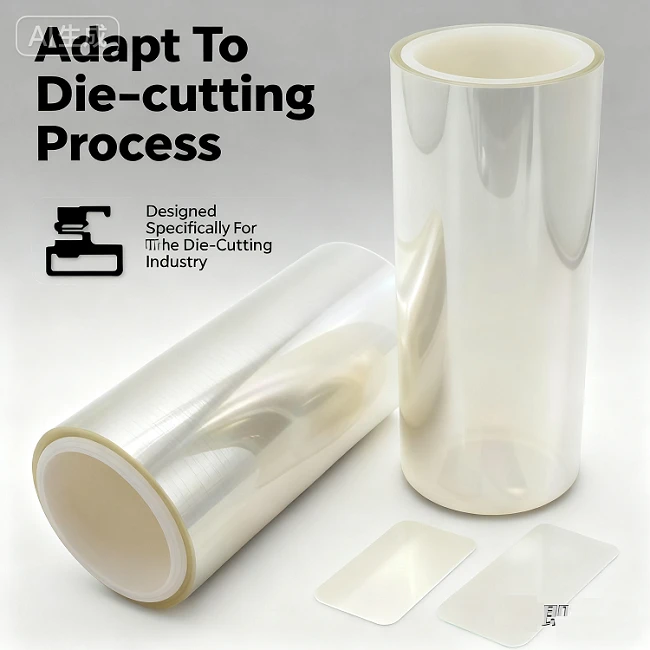
- Die - cutting Protective Film: Die - cutting protective films are tailored to fit specific FPC shapes and sizes through a die - cutting process. This ensures precise coverage and protection. For more information on Die - cutting Protective Film.
- PET Plastic Protective Film: PET plastic protective films are known for their transparency, flexibility, and good mechanical properties. They are widely used in consumer electronics due to their cost - effectiveness and ease of processing. Check out PET Plastic Protective Film.
Factors Affecting the Weight Contribution of FPC Protective Films
The weight of an FPC protective film and its impact on the overall weight of the FPC depend on several factors:
Film Material
Different materials have different densities, which directly affect the weight of the film. For example, PET plastic has a relatively low density compared to some other polymers. A PET plastic protective film will add less weight to an FPC than a film made from a denser material. The chemical composition and molecular structure of the material determine its density. Materials with more compact molecular arrangements tend to have higher densities and thus contribute more to the overall weight.
Film Thickness
Thickness is another crucial factor. Thicker films generally weigh more than thinner ones. When choosing an FPC protective film, the required level of protection must be balanced with the acceptable weight increase. For applications where weight is a critical concern, a thinner film may be preferred, even if it offers slightly less protection. However, in harsh environments, a thicker film may be necessary to ensure the long - term durability of the FPC, despite the additional weight.
Film Size
The size of the protective film, which is determined by the size of the FPC it is covering, also affects the weight. A larger film covering a bigger FPC will naturally add more weight than a smaller film on a smaller FPC. The dimensions of the film are usually customized according to the specific requirements of the FPC design.
Quantifying the Weight Impact
To understand the exact weight impact of an FPC protective film, we can use a simple calculation. The weight of a film can be estimated using the formula:
[W = \rho\times V]
where (W) is the weight, (\rho) is the density of the film material, and (V) is the volume of the film. The volume (V) can be calculated as (V = A\times t), where (A) is the area of the film and (t) is the thickness.
For example, let's assume we have a PET plastic protective film with a density (\rho = 1.38\ g/cm^{3}), an area (A = 10\ cm^{2}), and a thickness (t = 0.1\ mm=0.01\ cm).
First, calculate the volume:
[V=A\times t = 10\ cm^{2}\times0.01\ cm = 0.1\ cm^{3}]
Then, calculate the weight:
[W=\rho\times V=1.38\ g/cm^{3}\times0.1\ cm^{3}=0.138\ g]
This calculation shows how the density, area, and thickness of the film interact to determine its weight.
Applications and Weight Considerations
In different applications, the acceptable weight increase due to the protective film varies significantly:
Aerospace
In the aerospace industry, weight is a critical factor as it directly affects fuel efficiency and payload capacity. Even a small increase in the weight of an FPC can have a significant impact on the overall performance of an aircraft or a satellite. Therefore, aerospace applications often require ultra - thin and lightweight protective films. For example, a heat - resistant but lightweight heat curing protective film may be used to protect FPCs in avionics systems.
Wearable Technology
Wearable devices, such as smartwatches and fitness trackers, need to be lightweight and comfortable to wear. The weight of the FPC and its protective film can affect the user experience. A PET plastic protective film is often a popular choice in this industry due to its low weight and good transparency.
Mobile Devices
In mobile phones and tablets, manufacturers are constantly striving to reduce the weight of the device while maintaining its durability. The protective film used on FPCs in these devices must be carefully selected to balance weight and protection. Die - cutting protective films can be customized to fit the FPC precisely, minimizing unnecessary weight while providing adequate protection.
Conclusion
In conclusion, FPC protective films do have an impact on the weight of FPCs, and this impact is influenced by factors such as film material, thickness, and size. Understanding these factors is crucial for manufacturers and designers to make informed decisions when selecting a protective film. At our company, we offer a wide range of FPC protective films, including Heat Curing Protective Film, Die - cutting Protective Film, and PET Plastic Protective Film. We can help you choose the most suitable film for your specific application, taking into account both the required level of protection and the acceptable weight increase.
If you are interested in our FPC protective films or have any questions regarding the weight impact and selection of the films, please feel free to contact us for procurement discussions. We are committed to providing high - quality products and excellent customer service to meet your needs.
References
- "Flexible Printed Circuit Technology" by John W. Eichelberger.
- "Handbook of Plastic Films" edited by Jaime Gomez - Ribelles.
- Industry reports on FPC manufacturing and protective film applications.