
Polyimide Film
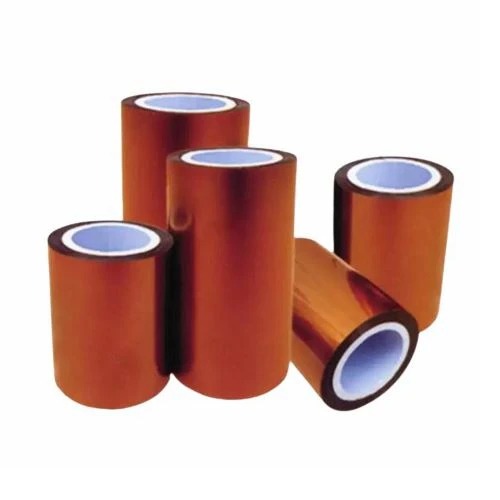
Polyimide films are used in applications where reliable, durable performance is required, often in harsh environments. Polyimide film is a lightweight, flexible polymer based material that has excellent heat and chemical resistant properties. Polyimide film can withstand temperatures ranging from -269℃ to 400℃. In addition to excellent heat resistance properties, polyimide film also has excellent dielectric properties. Typical applications for polyimide film include multi-layer insulation blankets for space, flexible electronics, tapes, and various other high heat applications.


Advantages of Polyimide Film
Lightweight and flexible design
Polyimide films offer excellent flexibility and lightweight properties, making them suitable for flexible solar panels. These films can be easily shaped and bent to conform to different surfaces, enabling the development of solar panels that can be integrated into various structures and materials.
Enhanced durability
Solar panels are exposed to various environmental conditions, including temperature fluctuations, moisture, and UV radiation. Polyimide films provide high durability and resistance to these factors, ensuring long-term performance and protection of the solar panel components.
Improved efficiency
Polyimide films have high optical clarity, allowing sunlight to pass through with minimal interference or light scattering. This property is essential for solar panels to maximize the absorption of sunlight and enhance overall energy conversion efficiency.
Thermal stability
Solar panels can generate significant heat during operation, especially in concentrated photovoltaic systems. Polyimide films exhibit excellent thermal stability, enabling them to withstand high temperatures without degrading or losing their properties. This helps maintain the long-term performance and reliability of solar panels.
Production Market
600+ customers annually. Products are exported to Vietnam, Singapore, India, the United States, Germany and so on.
R&D Capability
7 invention patents, 3 high-tech product certification certificates, 8 utility model patents, national high-tech enterprise, Suzhou Engineering Research Center.
Production Equipment
18 production coating lines / 9 rewinding machines
2 sample coating lines / 18 slitting machines / 11 cutting machines
Our Factory
Founded in 2008 TAILUN is one of the largest coating manufacturers in China, and is committed to the technical research and development and production of adhesive materials in consumer electronics, automotive, electrical and other industries Main products include protective film, adhesive tape, release film and PI products, etc.
Polyimide is a polymer composed of imide monomers. Polyimide is used as the insulating material in many digital isolators for a number of reasons, including excellent breakdown strength, thermal and mechanical stability, chemical resistance, ESD performance, and relatively low permittivity. Besides good high voltage performance, polyimide has excellent ESD performance that is capable of handling EOS and ESD events exceeding 15 kV. During energy limited ESD events, the polyimide polymer absorbs some of the charge to form stable radicals that interrupt the avalanche process and bleeds away some of the charge. Other dielectric materials such as oxide typically do not have this ESD tolerant characteristic and may go into avalanche once the ESD level exceeds the dielectric strength, even if the ESD energy is low. The polyimide also has high thermal stability, with a weight loss temperature over 500°C and a glass transition temperature of about 260°C. The polyimide also has high mechanical stability with a tensile strength over 120 MPa and a high elastic elongation over 30%. In spite of its high elongation, polyimide does not deform easily because the Young’s modulus is about 3.3 GPa.
The polyimide has excellent chemical resistance, which is one reason it has been widely used for insulation coatings for high voltage cables. Polyimide films can be coated on the semiconductor wafer substrates and high chemical resistance also helps to facilitate IC processing on top of polyimide layers, such as the Au plating used to create iCoupler transformer coils. Lastly, the thick polyimide films, with a dielectric constant of 3.3, work well with the small diameter Au transformer coils to minimize capacitance across the isolation barrier. Most iCoupler products exhibit less than 2.5 pF capacitance between input and output. Because of these characteristics, polyimide is increasingly used in microelectronics applications, and it is an excellent choice as insulating material for the iCoupler high voltage digital isolators.
The Application Fields of Polyimide Film
Electronic field
Polyimide films have been widely used in the field of electronics due to their excellent insulation, high temperature resistance, and mechanical strength. It can be used to manufacture capacitors, wire insulation layers, support structures for electronic components, etc., providing strong guarantees for the stability and reliability of electronic products.
Aerospace field
In the aerospace field, polyimide films are widely used in the manufacturing of aircraft, rockets, and other aircraft due to their lightweight, high strength, and good thermal stability. It can be used as a structural material to improve the overall strength and rigidity of aircraft, providing a solid guarantee for flight safety.

Automotive sector
With the rise of new energy vehicles, the application of polyimide films in the automotive field is becoming increasingly widespread. It can be used to manufacture battery separators, wire insulation layers, lightweight body structures, etc., making important contributions to the performance improvement and energy conservation and emission reduction of new energy vehicles.
Medical field
In the medical field, polyimide films are widely used in artificial organs, medical devices, drug carriers, and other fields due to their biocompatibility and good mechanical properties. It can not only improve the service life and safety of medical equipment, but also provide better support for patient rehabilitation.
What Are the Differences Between Polyimide and Polyamide
Polyimide vs polyamide are two distinct synthetic polymers that exhibit different properties and find applications in various industries. Understanding the differences between polyimide and polyamide is essential for selecting the appropriate material for specific requirements.
Chemical Structure
The primary difference between polyimide vs polyamide lies in their chemical structures. Polyimide consists of imide linkages (-CONH-) in its backbone, while polyamide contains amide linkages (-CO-NH-) in its chain structure. This structural dissimilarity results in variations in their properties and behaviors.
Thermal Stability
Polyimide is renowned for its exceptional thermal stability. It exhibits remarkable resistance to high temperatures, making it suitable for applications that require heat resistance, such as aerospace components and electronic devices. In contrast, while polyamide offers good heat resistance, it generally has lower thermal stability compared to polyimide.
Mechanical Strength
Polyimide typically possesses higher mechanical strength than polyamide. Its robust nature enables it to withstand heavy loads and forces, making it suitable for structural applications where strength and durability are essential. Polyamide also exhibits good mechanical properties but generally has lower strength compared to polyimide.
Electrical Insulation
Both polyimide vs polyamide exhibit excellent electrical insulation properties. However, due to its unique chemical structure and high-temperature stability, polyimide often surpasses polyamide in terms of electrical insulation performance. Polyimide is commonly used as an insulating material in high-temperature electrical applications, such as wires, cables, and electronic components.
Applications
Polyimide vs polyamide find applications in different industries due to their distinct properties. Polyimide is commonly employed in aerospace, electronics, automotive, and semiconductor industries due to its exceptional thermal stability, mechanical strength, and electrical insulation properties. It is used for applications such as insulation films, flexible printed circuit boards, and engine components. Polyamide, on the other hand, is widely used in the textile industry for fabrics, clothing, and sportswear, as well as in automotive components, electrical insulation, and engineering materials.
Production Process of Polyimide Film
The production of polyimide film is basically two-step method, the first step: Synthesis of polyamide acid, the second step: Film-forming imidization. Film forming methods mainly include impregnation method (or aluminum foil glue method), casting method and salivation stretching method (biaxial directional stretching method). The polyimide membrane produced by salivation method can be used in a small amount of fccl. The film produced by stretching method (biaxial orientation method) has significantly improved its properties, but the complex production conditions, large investment and high product price can obtain high quality film products such as high dimensional stability, low moisture absorption and so on.
The main equipment, preparation steps, and product testing of Polyimide Film produced by the salivation method are as follows.
Main Equipment
Stainless steel resin solution storage tank, salivation nozzle, salivation machine, imidization furnace, winder and hot air system, etc.
Preparation Steps
The defoamed polyamic acid (PAA) solution is pressed from the stainless steel solution storage tank through the pipeline into the salivation nozzle storage tank on the front head. The steel belt runs at a uniform speed in the direction shown in the figure, and the solution in the storage tank is taken away by the scraper in front of the saliva nozzle to form a liquid film with uniform thickness, and then enter the drying tunnel to dry.
The clean and dry air is sent to the heater by the blower to be preheated to a certain temperature and then enters the upper and lower drying channels. The flow direction of the hot air is opposite to the running direction of the steel strip, so that the temperature of the liquid film will gradually rise during drying, and the solvent will gradually volatilize to increase the drying effect.
The polyamic acid film runs on the steel belt for a week, and the solvent evaporates to become a solid film, and the film peeled from the steel belt is guided to the imidization furnace by a guide roller.
The imidization furnace is generally in the form of a multi-roller, and the guide roller at the synchronous speed of the casting machine guides the polyamic acid film into the imidization furnace. After the high temperature imidization, the polyimide film is rewinded by the winding machine from deep cooling. 269℃ to high temperature +400℃, it can still show excellent physical, mechanical and electrical properties.
Product Testing
After the product is manufactured, it must be tested for its tensile strength, elongation at break, power frequency electrical strength, surface resistivity, volume resistivity, etc.
The Polyimide Film produced by the salivation method has unlimited length, easy peeling, good flatness and uniform thickness. However, the precision of the equipment is relatively high; And the viscosity of PAA solution is relatively large, defoaming filtration is more difficult, and the production speed is slow. Therefore, the salivation method is mainly used for plastics that are not suitable for extrusion or calendering, such as high melting temperature and high melt viscosity, or plastics whose decomposition temperature is very close to the melting temperature.
Two, Salivation-two-way Stretching Method
Under heating conditions, the film is stretched along one (uniaxial) or two (biaxial) directions in the plane coordinates, so that the macromolecular chains are stretched and arranged along the stretching direction to change certain properties of the Polyimide film. This process is called PolyimideStretch orientation of the film. Generally speaking, stretching is suitable for improving the mechanical properties of thermoplastic materials. The stretching method for preparing Polyimide film can be divided into uniaxial stretching and biaxial (biaxial) stretching.
The uniaxial stretching equipment is relatively simple. However, although it strengthens the mechanical properties of the material in the stretching direction, it also makes the mechanical properties of the material in the vertical direction even worse than the unstretched one. Therefore, people are increasingly interested in biaxial stretching. Biaxial (biaxial) stretching can make the molecular chain oriented along the plane, so that the material has good planar properties. Two-way (biaxial) can be divided into secondary stretching and primary stretching. The so-called secondary stretching is to use a set of rollers with different drilling speeds to first stretch to a certain multiple parallel to the axial direction (longitudinal stretching), and then use the gradually enlarged opening angle on the fixture guide rail to stretch a certain amount perpendicular to the axial direction. Multiple (transverse stretch).
The biaxial stretching method generally adds a stretching orienting device after the salivation method. The film is heated to a specified temperature and stretched to a large extent, so that the molecular chains are arranged neatly along the stretching direction to a large extent, and one direction is unidirectional. Horizontal and vertical are two-way stretching. After stretching, the strength is 3-5 times better, the heat and cold resistance are improved, and the physical properties are significantly improved. High-quality membranes use this method. FCCL, which has high requirements in terms of performance (dimensional stability, etc.), all use Polyimide films produced by the biaxial orientation method.
How Polyimide Films Can Change Our Lives
Polyimide film is becoming a new favorite of mobile phone manufacturers. This material has many unique properties, bringing unprecedented innovation to modern smartphones.
Polyimide film is a material with high strength, high elasticity, corrosion resistance, and thinness. It has good transparency, insulation, and high temperature resistance, making it widely applicable in mobile phone manufacturing.
With the increasing maturity of smartphone camera technology, camera protection has become a focus of attention for mobile phone manufacturers. The high transparency and wear resistance of polyimide film make it an ideal choice for protecting cameras. It can effectively prevent camera wear and scratches, ensuring long-lasting and new photo effects.
Battery packaging: As the core component of mobile phones, the safety of batteries is crucial. Polyimide film has excellent barrier performance and corrosion resistance, which can effectively prevent battery leakage, oxidation and other problems. At the same time, its lightweight characteristics make the battery capacity large and lightweight, improving the phone's battery life.
The hardness of a smartphone screen protector directly affects the user experience. Polyimide film has high scratch resistance, which can effectively prevent the screen from being scratched. Its high transparency ensures the clarity of the screen display, bringing users the ultimate visual enjoyment.
FAQ
We're well-known as one of the leading polyimide film manufacturers and suppliers in China. We warmly welcome you to buy buy high quality polyimide film for sale here and get free sample from our factory.
high tensile strength polyimide film, lcd polyimide film, precision cut polyimide film