

Hey there! As a supplier of polarizer protective films, I often get asked about the materials used to make these films. So, I thought I'd take a moment to break it down for you and give you a better understanding of what goes into these essential products.
Common Materials for Polarizer Protective Films
Polyurethane (PU)
One of the most popular materials for polarizer protective films is polyurethane, or PU for short. PU protective films are known for their excellent flexibility and durability. They can withstand a fair amount of wear and tear, which makes them great for protecting polarizers in various environments.
PU films also have good adhesion properties. This means they can stick well to the polarizer surface without leaving any residue when removed. Whether it's in a high - traffic area or a place where the polarizer might be bumped around a bit, a PU Frotective Film can provide reliable protection.
The flexibility of PU allows it to conform to the shape of the polarizer, providing full - coverage protection. It can also resist scratches and abrasions, which is crucial for maintaining the clarity of the polarizer. Plus, PU films are often resistant to chemicals, so they can protect the polarizer from damage caused by exposure to various substances.
Polyethylene Terephthalate (PET)
PET is another widely used material for polarizer protective films, especially Pet Protective Film for Glass Products. PET films are known for their high transparency. This is extremely important when it comes to polarizers because you don't want the protective film to interfere with the polarizer's function.
PET has good mechanical properties, such as high tensile strength. This means it can hold up well under stress without tearing or stretching too much. It's also resistant to heat and moisture, which are two factors that can potentially damage polarizers.
In addition, PET films can be easily coated with various substances to enhance their performance. For example, they can be coated with an anti - static layer to prevent dust from sticking to the polarizer, or an anti - glare layer to reduce reflections.
Acrylic
Acrylic is a versatile material that is often used in two - layer configurations for polarizer protective films, like the Two - Layer Acrylic Protective Film. Acrylic films offer good optical clarity, which is essential for polarizers. They can provide a clear view through the polarizer without distorting the image.
One of the advantages of acrylic is its resistance to UV radiation. UV rays can cause damage to polarizers over time, such as discoloration and degradation of the polarizing properties. Acrylic films can act as a barrier against UV rays, extending the lifespan of the polarizer.
Acrylic also has good adhesion and can be easily applied to the polarizer surface. The two - layer design of some acrylic protective films can provide additional benefits, such as better shock absorption and improved scratch resistance.
How the Materials Are Processed
Once the raw materials are selected, they go through a series of processing steps to turn them into polarizer protective films.
First, the material is usually melted and extruded into a thin film. This process ensures that the film has a uniform thickness and quality. After extrusion, the film may undergo further treatments, such as stretching. Stretching can improve the mechanical properties of the film, such as its strength and flexibility.
Next, the film is often coated with an adhesive layer. The adhesive is carefully selected to ensure good adhesion to the polarizer surface while still being removable without leaving any residue. The coating process is crucial because it determines how well the film will stick to the polarizer and how easy it will be to remove when needed.
Finally, the film is cut into the appropriate sizes and shapes for the specific polarizer applications. This may involve precision cutting techniques to ensure a perfect fit.
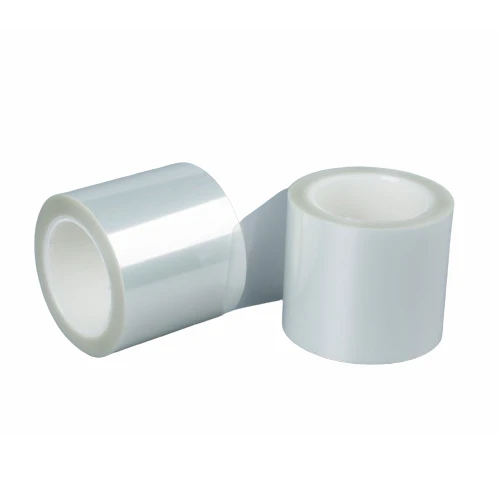

Factors to Consider When Choosing a Polarizer Protective Film
When you're looking for a polarizer protective film, there are several factors you need to consider.
Application Environment
If the polarizer is going to be used in a harsh environment, such as an industrial setting or outdoors, you'll need a more durable film. For example, a PU film might be a good choice because of its resistance to scratches, abrasions, and chemicals. On the other hand, if the polarizer is used in a clean, indoor environment, a PET or acrylic film might be sufficient.
Optical Requirements
The optical properties of the film are very important. You want a film that has high transparency and doesn't interfere with the polarizer's function. Make sure to choose a film that has been tested for optical clarity and doesn't cause any color distortion or glare.
Adhesion
The adhesion of the film to the polarizer is crucial. You need a film that sticks well enough to stay in place but can also be removed easily without damaging the polarizer. Different materials and adhesives have different adhesion properties, so it's important to choose the right combination for your specific needs.
Why Choose Our Polarizer Protective Films
As a supplier, we take pride in offering high - quality polarizer protective films. We use the best materials available and follow strict manufacturing processes to ensure the performance and reliability of our products.
Our films are carefully tested to meet the highest standards of optical clarity, adhesion, and durability. Whether you need a film for a small polarizer in a consumer device or a large - scale polarizer in an industrial application, we have the right solution for you.
We also offer customized solutions. If you have specific requirements for the size, shape, or performance of the polarizer protective film, we can work with you to develop a product that meets your exact needs.
Let's Connect!
If you're interested in purchasing polarizer protective films, I'd love to hear from you. Whether you have questions about our products, need a sample, or want to discuss a large - scale order, don't hesitate to reach out. We're here to help you find the best protective film for your polarizers and ensure that your products are well - protected.
References
- "Polymer Science and Technology" by Morton M. Denn
- "Optical Thin Films and Coatings: From Materials to Applications" by Angus Macleod
So, that's a wrap on what materials are used to make polarizer protective films. I hope this blog has been helpful to you. If you have any more questions, feel free to ask!