
Hey there! As a supplier of UV curing protective film, I often get asked about tear strength. So, let's dive right in and talk about what the tear strength of UV curing protective film is all about.
First off, tear strength is a super important property of any protective film. It basically tells you how well the film can resist tearing when it's under stress. For UV curing protective film, this is crucial because it's used in a bunch of different applications where it might get pulled, stretched, or snagged.
What Affects the Tear Strength of UV Curing Protective Film?
There are several factors that can influence the tear strength of UV curing protective film. One of the main ones is the material used to make the film. Different polymers have different inherent tear strengths. For example, some high - performance polymers are designed to be more tear - resistant than others.
The thickness of the film also plays a big role. Generally speaking, thicker films tend to have higher tear strengths. However, it's not always that simple. Sometimes, a well - formulated thinner film can have comparable tear strength to a thicker one if the polymer matrix is optimized.
The curing process is another key factor. In UV curing, the intensity and duration of the UV light exposure can affect how well the polymer chains cross - link. A proper cross - linking process results in a more cohesive and tear - resistant film. If the curing is too weak, the film might be more prone to tearing because the polymer chains aren't strongly bonded together. On the other hand, over - curing can sometimes make the film brittle, which also reduces its tear strength.
Measuring Tear Strength
There are a few standard methods to measure the tear strength of a film. One common way is the Elmendorf tear test. In this test, a specimen of the film is clamped in a special device, and a pendulum is used to tear the film. The energy required to tear the film is measured, and this value is used as an indicator of the film's tear strength.
Another method is the trouser tear test. In this test, a film specimen is cut in a trouser - like shape, and the two “legs” of the specimen are pulled apart at a constant speed. The force required to continue tearing the film is measured, and this gives an idea of the film's tear resistance.
Why Tear Strength Matters in Different Applications
In the electronics industry, UV curing protective film is often used to protect delicate components during manufacturing and transportation. A film with high tear strength ensures that it won't tear easily when it's being handled or when it encounters minor abrasions. This helps to prevent damage to the underlying electronics, which can be very expensive to repair or replace.
For automotive applications, the film might be used to protect painted surfaces, dashboards, or other interior and exterior parts. Tear - resistant film can withstand the rigors of daily use, such as being brushed against by passengers or exposed to environmental factors like wind and debris.
In the packaging industry, UV curing protective film is used to wrap products. A film with good tear strength means that the package won't accidentally tear during handling, storage, or shipping, keeping the product inside safe and secure.
Our UV Curing Protective Film Offerings
We offer a variety of UV curing protective films, each with its own unique properties and tear strength characteristics. For example, our Two - Layer Silicone Protective Film is designed with a special two - layer structure that provides excellent tear resistance along with other benefits like good adhesion and easy removal.
Our Antistatic Protection Film is not only great at preventing static buildup but also has a decent tear strength. This makes it ideal for protecting sensitive electronic components where both antistatic properties and tear resistance are important.
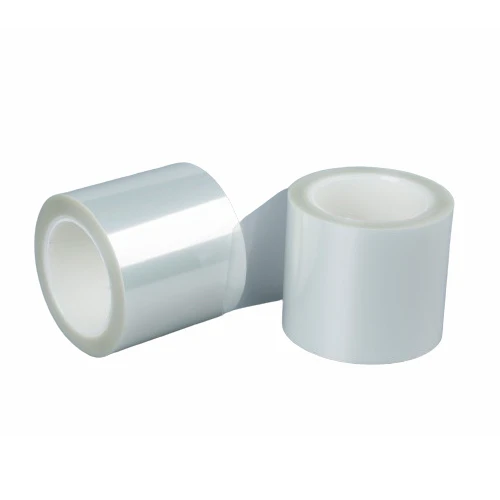

If you're looking for a more lightweight option, our Single - Layer Silicone Protection Film still offers good tear strength while being thinner and more flexible.
How to Choose the Right Tear Strength for Your Needs
When choosing a UV curing protective film, you need to consider the specific requirements of your application. If you're dealing with a high - stress environment where the film might be subject to a lot of pulling and stretching, you'll want a film with a high tear strength. For less demanding applications, a film with moderate tear strength might be sufficient.
It's also important to consider other properties of the film, such as adhesion, transparency, and chemical resistance. Sometimes, you might need to make a trade - off between tear strength and other properties depending on your priorities.
Conclusion
In conclusion, the tear strength of UV curing protective film is a complex but important property. It's affected by factors like the material, thickness, and curing process. Measuring tear strength can be done using standard tests like the Elmendorf and trouser tear tests.
As a supplier, we understand the importance of tear strength in different applications, and we offer a range of films to meet your specific needs. Whether you need a high - tear - strength film for a demanding industrial application or a more lightweight option for a consumer product, we've got you covered.
If you're interested in learning more about our UV curing protective films or want to discuss your specific requirements, don't hesitate to reach out. We're here to help you find the perfect film for your project and can offer samples for you to test. Let's start a conversation and see how we can work together to meet your protective film needs.
References
- ASTM D1922 - Standard Test Method for Propagation Tear Resistance of Plastic Film and Thin Sheeting by Pendulum Method.
- ISO 6383 - 2:2004 - Plastics - Film and sheeting - Determination of tear resistance - Part 2: Trouser tear method.