
Is PU Protective Film Stretchable?
As a dedicated supplier of PU protective films, I often encounter various inquiries from customers regarding the properties of our products. One question that frequently arises is whether PU protective film is stretchable. In this blog post, I will delve into the characteristics of PU protective film and explore its stretchability in detail.
Understanding PU Protective Film
PU, or polyurethane, is a versatile polymer known for its excellent mechanical properties, chemical resistance, and durability. PU protective films are widely used in a variety of industries, including electronics, automotive, and manufacturing, to protect surfaces from scratches, abrasions, and other forms of damage. These films are typically made by coating a layer of PU resin onto a substrate, such as polyester or polypropylene, and then curing the resin to form a tough, flexible film.
Stretchability of PU Protective Film
The stretchability of PU protective film depends on several factors, including the type of PU resin used, the thickness of the film, and the manufacturing process. In general, PU protective films can exhibit varying degrees of stretchability, ranging from slightly elastic to highly stretchable.
- Elasticity in PU Resin: The chemical structure of the PU resin plays a crucial role in determining the stretchability of the film. Some PU resins are formulated to have a high degree of elasticity, allowing the film to stretch and recover its original shape without permanent deformation. These elastic PU resins are often used in applications where the film needs to conform to irregular surfaces or withstand repeated stretching, such as in the automotive industry for protecting painted surfaces during transportation and installation.
- Film Thickness: The thickness of the PU protective film also affects its stretchability. Thinner films tend to be more flexible and stretchable than thicker ones, as they have less material to resist deformation. However, thinner films may also have lower tear strength and durability, so a balance must be struck between stretchability and performance.
- Manufacturing Process: The manufacturing process can also influence the stretchability of PU protective film. For example, films that are cast or extruded under specific conditions may have different molecular orientations and physical properties, which can affect their stretchability. Additionally, the addition of plasticizers or other additives during the manufacturing process can enhance the flexibility and stretchability of the film.
Applications of Stretchable PU Protective Film
The stretchability of PU protective film makes it suitable for a wide range of applications, where it can provide excellent protection while conforming to the shape of the surface being protected.
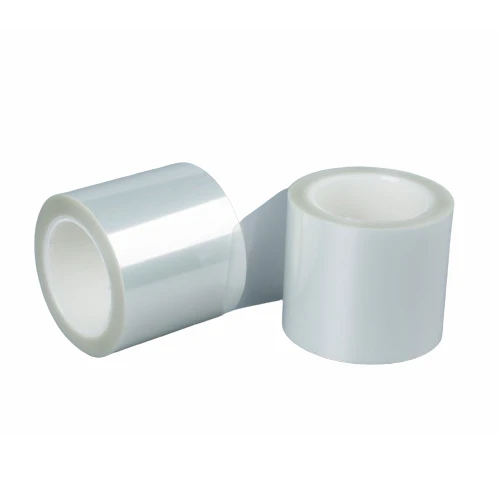
- Automotive Industry: In the automotive industry, stretchable PU protective films are used to protect painted surfaces, such as car body panels, bumpers, and spoilers, during transportation, storage, and installation. The film can be easily stretched and applied to curved or irregular surfaces, providing a tight and secure fit that prevents scratches, chips, and other damage.
- Electronics Industry: Stretchable PU protective films are also used in the electronics industry to protect sensitive components, such as touchscreens, displays, and circuit boards, from scratches, fingerprints, and dust. The film can be stretched to fit the shape of the component, providing a clear and protective barrier that does not interfere with the functionality of the device.
- Manufacturing and Packaging: In the manufacturing and packaging industries, stretchable PU protective films are used to protect products during handling, shipping, and storage. The film can be wrapped around products of various shapes and sizes, providing a protective layer that prevents damage from abrasion, impact, and moisture.
Comparing PU Protective Film with Other Types of Protective Films
While PU protective film offers excellent stretchability and other beneficial properties, it is important to compare it with other types of protective films to determine the best option for a specific application.
- Two-Layer Acrylic Protective Film: Two-Layer Acrylic Protective Film is another popular type of protective film that is known for its high clarity, adhesion, and weather resistance. Unlike PU protective film, acrylic films are typically less stretchable and more rigid. They are often used in applications where a flat and smooth surface is required, such as in the display industry for protecting LCD screens.
- Protective Film for Graphite Sheet: Protective Film for Graphite Sheet is designed specifically for protecting graphite sheets, which are widely used in electronic devices for heat dissipation. These films usually have good thermal conductivity and chemical resistance. In comparison to PU protective film, they may not need to be as stretchable, as graphite sheets are relatively flat and do not require the film to conform to complex shapes.
- Single-Layer Silicone Protection Film: Single-Layer Silicone Protection Film is known for its excellent release properties and high-temperature resistance. Silicone films are generally more flexible than acrylic films but may not have the same level of stretchability as PU protective films. They are commonly used in applications where easy release and high-temperature stability are required, such as in the manufacturing of printed circuit boards.
Quality Assurance and Testing
As a supplier of PU protective film, we are committed to providing high-quality products that meet the specific needs of our customers. To ensure the stretchability and other performance characteristics of our films, we conduct rigorous quality assurance and testing procedures.
- Tensile Testing: Tensile testing is used to measure the stretchability and strength of the PU protective film. This test involves pulling a sample of the film at a constant rate until it breaks, and the results are used to determine the film's ultimate tensile strength, yield strength, and elongation at break.
- Conformance Testing: We also perform conformance testing to ensure that the film can conform to irregular surfaces without cracking or peeling. This involves applying the film to a variety of surfaces with different shapes and curvatures and inspecting it for any signs of damage or poor adhesion.
- Environmental Testing: In addition to mechanical testing, we also conduct environmental testing to evaluate the performance of the film under different conditions, such as temperature, humidity, and UV exposure. This helps us to ensure that the film will maintain its stretchability and other properties over time, even in harsh environments.
Contact Us for Your PU Protective Film Needs
If you are in need of high-quality PU protective film with excellent stretchability and performance, look no further. Our company offers a wide range of PU protective films that are suitable for various applications. Whether you are in the automotive, electronics, or manufacturing industry, we can provide you with the right solution to meet your specific requirements.
We understand that every customer's needs are unique, and we are dedicated to working closely with you to develop customized solutions that meet your exact specifications. Our team of experts is available to answer any questions you may have and to provide you with technical support and guidance throughout the purchasing process.
Don't hesitate to reach out to us to discuss your PU protective film needs. We look forward to the opportunity to serve you and to help you find the perfect protective film solution for your business.
References
- ASTM International. (2021). Standard Test Methods for Tensile Properties of Plastics. ASTM D638 - 14e1.
- Society of Plastics Engineers. (2019). Plastics Engineering Handbook. Wiley.
- Automotive Industry Action Group. (2020). Automotive Quality Management System Requirements. IATF 16949:2016.