

Hey there! As a supplier of polarizer protective films, I often get asked how our polarizer protective films stack up against anti - reflective films. Let's dive right into it and break down the differences, advantages, and use - cases of each.
What are Polarizer Protective Films and Anti - Reflective Films?
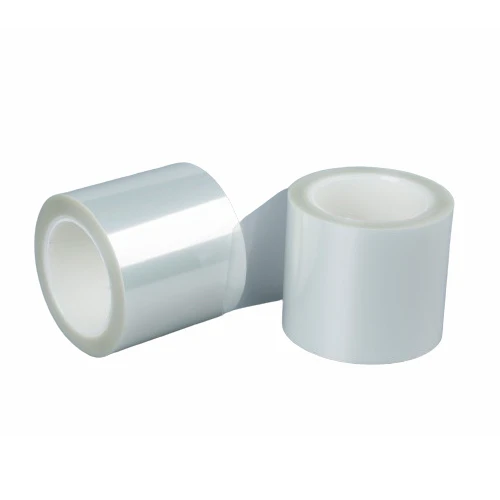
First off, let's clarify what these two types of films are. A polarizer protective film, like the ones we supply, is designed to do two main things. It protects the surface of a device, be it a smartphone, a tablet, or a display screen, from scratches, smudges, and other physical damages. On top of that, it has a polarizing function. Polarization helps in reducing glare and improving the visibility of the screen under different lighting conditions.
On the other hand, anti - reflective films are mainly focused on one key aspect: reducing reflections. When light hits a surface, it bounces off, creating reflections that can be really annoying, especially when you're trying to look at a screen. Anti - reflective films are engineered to minimize these reflections, making the screen easier to view.
Visual Performance
One of the most significant differences between the two lies in their visual performance. Polarizer protective films are great when it comes to reducing glare from specific angles. For example, if you're outside on a sunny day, looking at your phone, the polarizer film can cut through the harsh sunlight and let you see the screen clearly. It works by only allowing light waves that vibrate in a certain direction to pass through, blocking out the rest.
Anti - reflective films, however, work more on a broader scale to reduce all types of reflections. They're effective in both indoor and outdoor settings. In an office with fluorescent lights, or in a room with bright overhead lighting, an anti - reflective film can make the screen look less shiny and more comfortable to look at. But they might not be as good as polarizer films in dealing with direct sunlight glare.
Protection Level
When it comes to protecting the actual screen, polarizer protective films have an edge. They're usually made with materials that are resistant to scratches. Whether it's your keys in your pocket rubbing against your phone screen or a accidental brush against a rough surface, the polarizer film can take the hit and keep your screen scratch - free.
Anti - reflective films, while they do offer some level of protection, are not primarily designed for this purpose. Their main focus is on reflection reduction, so their protective capabilities are often more limited. If you're someone who is rough on your devices, a polarizer protective film would be a better choice.
Applications
The applications of these two types of films also vary. Polarizer protective films are commonly used in devices that are frequently used outdoors, such as smartphones, GPS devices, and outdoor displays. Their ability to reduce glare in bright sunlight makes them ideal for these scenarios.
Anti - reflective films, on the other hand, are popular in indoor settings. You'll often find them on computer monitors, laptops, and televisions. In an office environment, where reducing reflections from overhead lights is crucial for comfortable viewing, anti - reflective films are the go - to solution.
Cost Considerations
Cost can also be a factor when choosing between the two. Generally, polarizer protective films tend to be a bit more expensive. This is because they offer multiple functions - both protection and polarization. The manufacturing process is also more complex, which adds to the cost.
Anti - reflective films are usually more budget - friendly. They're simpler in design and are focused on one main function, so the production costs are lower. However, it's important to remember that you get what you pay for. If you need the added protection and polarization features, the extra cost of a polarizer protective film might be worth it.
Our Polarizer Protective Film Offerings
As a supplier, we offer a wide range of polarizer protective films. We have FPC Protective Film which is specifically designed for flexible printed circuits. These films provide excellent protection and polarization, ensuring that your FPCs work optimally even in challenging environments.
Our Heat Temperature Resistance Protective Film is another great option. It can withstand high temperatures, making it suitable for devices that generate a lot of heat, such as gaming laptops or industrial displays.
And if you're looking for a film with a bit more flexibility and adhesion, our Two - Layer Silicone Protective Film is a top choice. It has a two - layer design that offers enhanced protection and easy application.

Making the Right Choice
So, which one should you choose? Well, it depends on your specific needs. If you're constantly using your device outdoors and need protection from scratches and glare, a polarizer protective film is the way to go. If you're mainly using your device indoors and just want to reduce reflections, an anti - reflective film might be sufficient.
Let's Talk Business
If you're interested in our polarizer protective films, or if you have any questions about how they compare to anti - reflective films, don't hesitate to reach out. We're here to help you make the best choice for your needs. Whether you're a small business looking to protect your employees' devices or a large manufacturer in need of bulk orders, we've got you covered. Contact us to start a conversation about your requirements and let's see how we can work together.
References
- "Optics and Photonics Handbook", CRC Press
- "Display Technology: Fundamentals and Applications", Wiley - VCH