

In today's digital age, electromagnetic radiation (EMR) has become an ever - present concern. From our smartphones and laptops to large - scale industrial equipment, we are constantly exposed to various forms of EMR. As a supplier of PU (Polyurethane) protective films, I often receive inquiries from customers asking whether our PU protective films can protect against electromagnetic radiation. In this blog, I will delve into this question based on scientific knowledge and the properties of our products.
Understanding Electromagnetic Radiation
Electromagnetic radiation consists of waves of the electromagnetic field, propagating through space and carrying electromagnetic radiant energy. It includes a wide range of frequencies, from extremely low - frequency (ELF) radiation, such as that emitted by power lines, to high - frequency radiation like X - rays and gamma rays. The most common sources of EMR in our daily lives are electronic devices such as mobile phones, Wi - Fi routers, and microwave ovens.
Excessive exposure to certain types of EMR, especially high - frequency radiation, has been associated with potential health risks. For example, ionizing radiation (such as X - rays and gamma rays) can damage DNA and increase the risk of cancer. Non - ionizing radiation, which includes radio waves, microwaves, and visible light, is generally considered less harmful, but there are still ongoing studies about its long - term effects on human health, such as potential impacts on the nervous system and sleep patterns.
The Properties of PU Protective Films
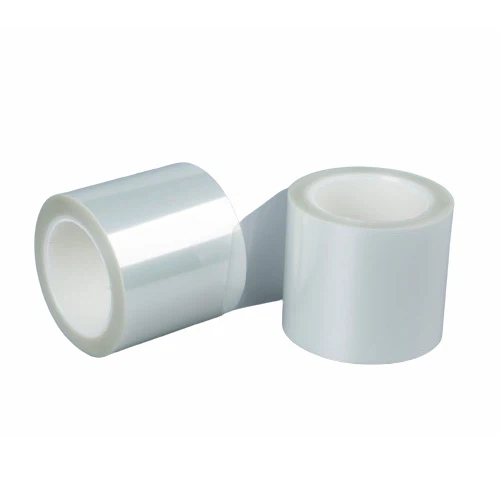
PU protective films are known for their excellent physical and chemical properties. They are highly flexible, durable, and have good adhesion to various surfaces. These films are commonly used to protect surfaces from scratches, abrasions, and chemical corrosion. For example, in the electronics industry, they are used to protect the screens of mobile phones, tablets, and other devices, ensuring that the screens remain in good condition during handling and use.
Our company offers a variety of PU protective films, including [Two - Layer Silicone Protective Film](/protective - film/two - layer - silicone - protective - film.html), [Reticulate Protection Film](/protective - film/reticulate - protection - film.html), and [FPC Protective Film](/protective - film/fpc - protective - film.html). Each type of film has its unique characteristics and applications. The two - layer silicone protective film provides a soft and gentle protection with good shock - absorption properties. The reticulate protection film has a special mesh structure that can effectively disperse stress and prevent the spread of scratches. The FPC protective film is designed specifically for flexible printed circuits, offering protection against moisture, dust, and mechanical damage.

Can PU Protective Films Protect Against Electromagnetic Radiation?
To determine whether PU protective films can protect against electromagnetic radiation, we need to understand the principles of EMR shielding. Generally, effective EMR shielding materials are those that can either absorb or reflect the electromagnetic waves. Materials with high electrical conductivity, such as metals (copper, aluminum), are commonly used for EMR shielding because they can create an electric current in response to the electromagnetic field, which in turn generates a secondary electromagnetic field that opposes the original field, thus reducing the amount of EMR passing through.
PU, as a polymer material, is an insulator, which means it has very low electrical conductivity. In its pure form, a PU protective film does not have the ability to conduct electricity and therefore cannot create the necessary electrical currents to absorb or reflect electromagnetic waves. So, from a basic scientific perspective, a standard PU protective film is not an effective shield against electromagnetic radiation.

However, it is possible to modify PU protective films to enhance their EMR - shielding capabilities. One approach is to incorporate conductive additives into the PU matrix. For example, adding carbon nanotubes, graphene, or metal nanoparticles can increase the electrical conductivity of the film. These conductive fillers can form a conductive network within the PU matrix, allowing the film to interact with the electromagnetic field and provide some degree of shielding.
Our research and development team has been exploring the possibility of developing EMR - shielding PU protective films. Through continuous experimentation, we have made some progress in creating films with enhanced conductive properties. Although these modified films cannot provide the same level of shielding as traditional metal - based shields, they can offer a certain degree of protection against low - frequency electromagnetic radiation, which is the most common type of EMR in our daily environment.
Practical Applications and Considerations
In practical applications, the demand for EMR - shielding materials is increasing, especially in the electronics and telecommunications industries. For example, in smartphones, reducing the exposure of the user to electromagnetic radiation is a major concern. A PU protective film with some EMR - shielding capabilities could be an attractive option, as it can provide both surface protection and a certain level of EMR protection.
However, there are some considerations when using PU protective films for EMR shielding. First, the addition of conductive additives may affect the other properties of the film, such as its transparency, flexibility, and adhesion. We need to carefully balance these properties to ensure that the film still meets the requirements of the end - user. Second, the effectiveness of the EMR - shielding depends on the type and concentration of the conductive additives, as well as the thickness of the film. A thicker film with a higher concentration of conductive additives may provide better shielding, but it may also be less flexible and more expensive.
Conclusion
In conclusion, standard PU protective films do not have inherent properties to protect against electromagnetic radiation due to their insulating nature. However, through the incorporation of conductive additives, it is possible to develop PU protective films with some EMR - shielding capabilities. Our company is at the forefront of this research, striving to provide customers with innovative solutions that combine surface protection and EMR protection.
If you are interested in our PU protective films, whether it is for surface protection or exploring the potential of EMR shielding, we welcome you to contact us for procurement and further discussions. Our team of experts is ready to provide you with detailed information and customized solutions based on your specific needs.
References
- "Electromagnetic Fields and Public Health: Mobile Phones", World Health Organization.
- "Polymer - Based Nanocomposites for Electromagnetic Interference Shielding", Progress in Polymer Science, Volume 37, Issue 11, 2012.
- "Carbon Nanotube - Polymer Composites: Chemistry, Processing, Mechanical and Electrical Properties", Progress in Polymer Science, Volume 35, Issue 11, 2010.